

Here’s a fact that many people have a hard time wrapping their brains around: Sociopaths exploit everyone in their lives.
On Lovefraud, we spend a lot of time talking about how sociopaths seduce caring, unsuspecting people into romantic relationships. Then, once they’re hooked, sociopaths treat them with unbelievable meanness and cruelty.
Well, guess what. Sociopaths do that to everyone — family members, friends, neighbors, co-workers, and even, sometimes, random strangers. They are equal opportunity manipulators.
Definition of a sociopath
First of all, whom are we talking about?
My friend and colleague, Dr. Liane Leedom, defines a sociopath as “someone who preys on and/or damages nearly everyone they spend time with.” This represents an important refinement to how Lovefraud has explained sociopaths for years.
The word “sociopath” is no longer an official clinical diagnosis. I use the word as an umbrella term for multiple related diagnoses — antisocial, narcissistic, borderline, histrionic and psychopathic personality disorders.














The first four — antisocial, narcissistic, borderline and histrionic — are the “Cluster B” personality disorders in the American Psychiatric Association’s Diagnostic and Statistical Manual of Mental Disorders, or DSM-5. According to DSM-5, they are all characterized by “dramatic, overly emotional or unpredictable thinking or behavior.”
The fact that the DSM-5 includes borderline personality disorder in Cluster B has always been problematic for me. Why? Because while some people diagnosed as borderline are manipulative and violent, others have the ability to love and do not intentionally cause harm. I’ve received many complaints from people who say they’ve been diagnosed with borderline personality disorder and object to being including under the umbrella of sociopaths.
Dr. Leedom’s definition solves the problem. Her criterion is the individual’s predatory and damaging behavior, not his or her DSM-5 diagnosis. I welcome this refinement.
Objects to be used
Sociopaths view other people as objects to be used. There are no exceptions to this rule. They will exploit and manipulate anyone who can give them something that they want.
It doesn’t matter what the relationship is. Their first targets are their own families. I’ve spoken to plenty of people who realize that their children are disordered and have been manipulating them since they were small. Many sociopaths view their parents as easy marks, knowing that mom and dad feel responsible for them or have a soft spot for them.
The next targets, as sociopaths grow up, are in their peer groups. For most kids who are born with a genetic risk for the disorder, antisocial behavior really starts to kick in at puberty. These kids begin their manipulation in earnest with friends, classmates and young dating partners. Of course, their targets don’t know what’s going on and may only realize years later that they were dealing with a sociopath.
As sociopaths go out into the world, they’re always on the lookout for people who are useful to them in some way. They’ll exploit friends, co-workers and neighbors. Anyone who can give the sociopaths something that they want — whether it’s money, sex, housing, business connections or simply entertainment — is a target.
Sociopaths in the family
I found the most evidence for the hypothesis that sociopaths exploit everyone in the research for my Senior Sociopaths book. It’s based on surveys filled out by 2,377 Lovefraud readers about disordered people who were age 50 or older. The vast majority described romantic relationships, but quite a few reported on their interactions with other family members, acquaintances and work colleagues.
Fifty-one respondents wrote about disordered siblings. These survey respondents endured a lifetime of harm.
- 97% said their sibling was manipulative over age 50.
- 97% said their sibling exhibited antisocial behavior after age 50
- 97% said their sibling’s behavior was just as bad or worse after 50
- 93% said their sibling engaged in emotional abuse
- 86% said their sibling engaged in psychological abuse
- 82% said they became anxious or depressed
- 70% said stress made them ill
Disordered acquaintances
Another 88 respondents wrote about their experiences with disordered neighbors, friends or acquaintances. These individuals — 49 men and 23 women — were age 50 or older and exhibited antisocial traits and behavior.
There wasn’t as much material harm as in romantic relationships. Only 36% of the respondents who described disordered friends, neighbors or acquaintances lost money, compared to 82% of those who married sociopaths. And when they did lose money, it wasn’t as much — 63% reported losing less than $5,000, while 59% of the married respondents lost more than $50,000.
But 86% of these respondents reported becoming anxious or depressed due to their experiences with acquaintances, which is comparable to 88% of those who married the sociopaths. They also reported high levels of emotional abuse (84%) and psychological abuse (73%).
Sociopaths at work
In the survey, 62 respondents identified the disordered individual aged 50 or older as strictly a work colleague or business associate.
Sociopaths in the workplace are typically manipulative, untrustworthy and troublesome. They can be reliable workers — when it suits their agenda. They kiss up to superiors and stab co-workers in the back, sometimes only to entertain themselves. They bully, harass and pit co-workers against each other, although this behavior may be subtle and difficult to detect. As with all their interactions, sociopaths view the workplace as a golden opportunity for exploitation.
Respondents identified the following as the top behaviors of sociopathic individuals at work:
- The individual manipulates others in the organization — 81%
- If anything goes wrong, the individual blames someone else — 76%
- The individual cannot be trusted — 74%
- The individual causes turmoil among co-workers — 69%
- The individual has people above him or her in the organization fooled — 62%
- The individual promises but does not deliver — 60%
- The individual is a bully — 55%
- The individual takes credit for work that others did — 55%
- The individual has violated policy or the law, but has gotten away with it — 55%
- The individual has caused co-workers or associates to be reprimanded or terminated — 52%
Sociopaths are everywhere
Sociopaths are everywhere and they exploit everyone. They actually use the same strategies on all their targets, although it may look different, depending on the context of the relationship. I’ve had mothers tell me they were love bombed by their disordered children. I’ve heard of people who were seduced into business relationships through flattery and duplicity.
According to Dr. Liane Leedom, about 12% of the population are likely sociopaths. That means we live among millions of them. Sociopaths want what they want, when they want it and how they want it, and will use anyone to get it.
We always need to be on the lookout, and when we encounter them, we need to protect ourselves.
Learn more: Senior Sociopaths — How to recognize and escape lifelong abusers, by Donna Andersen

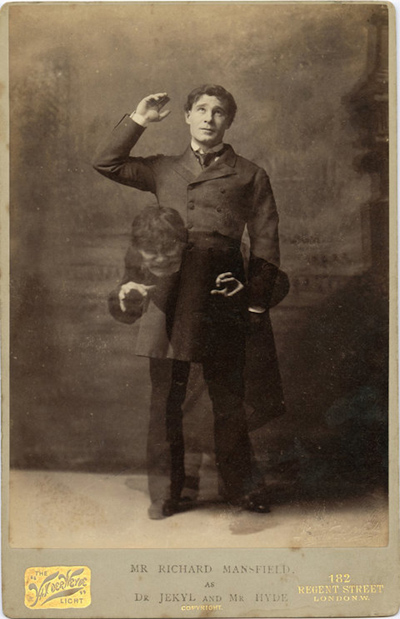 Sociopaths as Dr. Jekyll and Mr. Hyde