
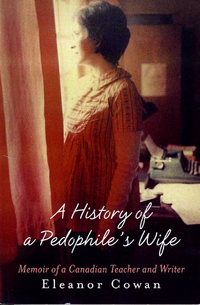
Editor’s note: The Lovefraud author Eleanor Cowan wants to educate survivors of narcissistic abuse into recognizing how their own actions may contribute to their misery. This is the fourth article in her collection of true stories called, “Impactful Stories for Stubborn Codependents,” and highlights the pain of family estrangement. Eleanor’s biographical book is called, “A History of a Pedophile’s Wife.”
Ending the Long Game
By Eleanor Cowan
Sori answered the call on a sunny summer day, steps away from reaching the summit of Mount Royal.
“Hey, Mom. How would you like to fly in and look after your fabulous grandkids while Heidi and I do a business trip for ten days?”
“I’d adore that, my son! Yes, yes, yes!”
The words leapt out before she could catch them.
She stopped mid-step, one hand on the railing. A small tightening passed through her chest—faint, but familiar.
She ignored it.
This time will be different.
“And Mom, I’d love for you to fly in a few days earlier, so you and I can hang out and catch up. I’d really like that.”
Sori closed her eyes.
For a moment, she let herself see it: the two of them in his cozy office, laughing easily—no sharpness, no edge. Just mother and son.
“I’d love that,” she said softly.
After the call, she stood very still, as though not to disturb the image she had just been given, nor to usher the ones she’d consistently buried over the years.
Then she began rearranging her life.
Appointments shifted. A bill set aside to offset the flight cost. Money transferred “just in case.” A fun list of treats her grandsons loved.
She moved quickly, efficiently, lovingly, as though careful effort might finally secure something lasting.
A couple of hours later, just as she was about to confirm her flight, the phone rang again.
“Hey Mom, sorry about this, but I forgot to check with Heidi before I arranged your arrival time. We’ve had to do a little reworking.”
Sori’s hand tightened around the phone.
“We now prefer that you arrive a day after we leave. A nanny will pick you up at the airport. And it would be best if you could leave the night before we get back.”
There was a pause.
In that pause, the earlier image flickered — the laughter, the ease — and vanished as it had so many times before.
She felt it then. She recognized it. Not just the change of plans.
The dismissal.
She swallowed.
“That’s … fine,” she almost said. That old response rose quickly, smoothly:
Don’t make trouble. Be grateful. Be easy.
But something in her chest gave way.


















“Are you serious?” she heard herself say.
Her voice sounded unfamiliar.
“So … no few days of togetherness?” she pressed, her breath catching. “Teddy, how could you possibly agree to this? How could you be so…” She stopped, but it was too late. “So cruel?”
“As I said, Mom, I should have checked with the boss first.” His reply was casual, unconcerned.
“But can you not feel how this would hurt me?” she said, her voice breaking now. “How could you and Heidi uninvite me?”
She heard herself override her own hush order — again, and again —surprised by the force of it.
There was a silence on the line — flat, closing.
The call ended.
Sori stood there, her hand still gripping the phone, her heart pounding as though she had done something rare and dangerous.
That evening, the email arrived.
I was horrified at the loud manner in which you addressed my husband, Sori … You will receive a Zoom invitation next Wednesday to discuss your behaviour.
A scheduled rebuke.
Sori sat at her kitchen table, reading the message again and again, as though somewhere within it there might be a softer meaning.
The week that followed stretched thin and sleepless.
Still, Sori pulled out her beloved books, walked for long stretches, and attended her two art classes.
From the outside, her life held.
At night, she whispered to herself, “My own child… How can a mother ever let go?”
At night, she replayed the call.
In one imagined version, she remained calm, gracious, and understanding. Her son paused, softened.
You’re right, Mom. That must have hurt.
In another, she said nothing at all. Just agreed. Like always.
That version brought a strange kind of relief.
By morning, she settled, as she often did, on the most familiar conclusion:
This could have been avoided. I shouldn’t have raised my voice.
And beneath that, quieter still:
I shouldn’t have needed anything.
When Wednesday came, she logged into the Zoom call alone to face the two. She sat upright at her kitchen table, hands folded tightly in her lap, as though being examined.
On the screen, her daughter-in-law spoke about respect and boundaries that must never be crossed.
Sori nodded.
Her son said little.
At one point, he lifted a spoonful of milky cereal to his mouth, chewing slowly, facing his wife as she spoke.
Sori kept her gaze steady.
She did not ask how they might have felt in her place. She did not speak of the earlier invitation, the one that had rekindled hope in her. She did not say, I was so hurt.
There was no inquiry into what had upset her so much.
Instead, she listened as Heidi cancelled her visit to her grandchildren. They needed, they said, to protect their children.
The call ended.
For a long time afterward, Sori remained seated. She sipped warm tea.
Later, when she rose to call her friend, she noticed how tightly she had been holding herself together. And even then, a part of her whispered, gently but firmly:
You must be more careful next time. Long games require tiptoeing. This is your fault.
She stood at the sink, staring into the empty cup. A quieter thought followed, almost reasonable:
This is what happens when I say something. Better to stay quiet next time.
She sank into the familiar certainty of it.
He had such a hard childhood, she told herself, for the millionth time. Anyone would be injured by that. And I wasn’t present enough. I know that.
A pause.
I guess I deserve this.
She stood there a long time, her hands gripping the edge of the sink.
“I feel devastated,” she said at last, quietly.
The next evening, Sori met Kay for supper, as they often did.
Kay, a trusted friend and inspired colleague, listened without interruption.
“Devastated makes sense,” she said gently after a moment. “But I’m wondering … where were you in all of that?”
Sori looked down, declining the basket of fresh bread offered to her.
“I’ve been thinking about that,” she said slowly. “Despite everything … I don’t think I could ever punish my parents. Not like that. It’s just … not in me.”
Kay nodded.
“You’re gentle when you speak about your parents,” she said. “I’m not sure I hear that same gentleness when you speak about yourself as a parent.”
Sori was quiet.
“That might be true,” she said at last. “I’ve been wondering about that.”
She hesitated.
“I don’t know if it comes from all that early talk about punishment … or something else.”
A faint, uncertain smile.
“Something a little… harsher.”
Kay didn’t interrupt.
“Do I think I should have done everything perfectly?” Sori went on. “And because I didn’t … I don’t get to be loved?”
The question seemed to surprise even her.
Kay passed the breadbasket to Sori again.
“I notice something,” Kay said gently. “When you talk about them, there’s space. When you talk about yourself … it tightens.”
Sori nodded.
“Am I still chasing the love I missed as a child?” she asked softly. “Is that my pattern? Is that why I keep taking it?”
Kay leaned back.
“I had an ah-ha moment like that this week,” she said. “I said no to more committee work — I was exhausted. And then I lay awake half the night worrying I’d disappointed my director.”
Sori looked up.
“So what did you do?”
“I noticed,” Kay said with a small smile. “I saw. I noted a familiar pattern.”
Sori let out a slow breath while spreading a layer of salty butter on fresh bread.
“Maybe that’s where I start,” she said. “Just … really noticing.”
A small act. But not nothing.
“I think I’d like to try being … a little kinder to myself.”
Kay smiled.
“That sounds like a good experiment.”
They lingered over their meal, the conversation easing into lighter things, as though something quieter and steadier had taken root. Outside, the evening air was soft.
“Let’s climb the mountain again tomorrow,” Kay said.
Sori smiled and paused, her hand resting lightly on the table.
“The long game I’ve been playing,” she said slowly, almost to herself — “the carefulness … the waiting … the earning …”
She let out a quiet breath.
“It doesn’t feel like love anymore.”
The words settled between them, unfamiliar but steady.
Not harsh. Not final.
But no longer something she could turn away from.
And though she did not yet know what would come next, she knew, with a clarity that surprised her, that she could not go back to playing the long game.
Eleanor Cowan’s book, A History of a Pedophile’s Wife, is available on Amazon.com.

 The sociopath’s isolation campaign: Keeping you from the people you love
lita33
Really well written and on point with what is going on with this next generation Donna.
If you could possibly believe that I am still in divorce – 12 years from an abusive alcoholic: learned that children will allow themselves to be manipulated : DNA hardwires us to align with the abusive parent for survival. I really appreciated what I learned in the continuing education classes I took – helped me understand how I could have stayed with a lying psychopath for thirty years (his DM list checked every box) for as long as I did (to protect our children). Shout out to you this mother’s day – not sure if I will hear from any of my four children who blame the protective parent because it’s easier than admitting they played a roll in her hurt too. xo