
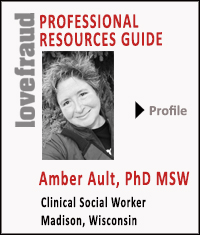
 By Amber Ault, Ph.D., MSW
Partner choice is important to all of us. Toxic relationship survivors often avoid opening themselves to new relationships because of their fear of choosing a partner who will bring more devastation and drama into their lives. Many of us learn to watch for the warning signs that a person is a psychopath, narcissist, or other toxic type, but we aren’t certain about the positive characteristics that indicate someone is good partner material.
In addition to screening out difficult people, we need to learn how to screen in good matches.
To help with this, I’ve come up with an easy-to-remember screening tool. It summarizes insights from years of academic research and work with clients (plus some direct experience as well).
What qualities does a person need to have awesome potential as a keeper?
Here are the ABC’s:










A: Available, accessible, accountable
B: Balanced, believable, non-blaming
C: Communicative, conscious, collaborative and compassionate
Elaborating on the ABC’s
Available means that this prospect is not entangled in other relationships, is not in the midst of a personal crisis, has little to no unfinished business with their ex’s, and is interested in you. They are free to date, and also interested in a long-term partnership.
Accessible means they can show up, follow through, and be responsive to your needs and desires as you grow closer. When you reach out, they respond timely and appropriately, and let you know they are listening and interested.
Accountable means they see themselves as responsible for their own life. They can make and keep commitments. When something doesn’t go well for them, they explore how they could do things differently to make things go better. They take responsibility for their financial situation, whatever it may be. When they mess up in relationships, as we all do, they can apologize and, more importantly, figure out how to make things right. They operate from a place of responsibility rather than victimization.
Balanced means the person is rarely in crisis. They handle the ups and downs of their life thoughtfully and creatively. They are open to influence from you, and aren’t interested in controlling you. They support you in being your best self and aren’t threatened by your success. They don’t engage in love bombing, nor do they ask you to play chase by disappearing on you by giving you mixed signals. They know who they are, what they want, and what they can offer in a relationship and expect you to know the same about yourself.
Believable means that what they say and what they do line up. They don’t over-sell and under-deliver. Your trust in them grows over time because you can believe what they say because their actions back them up.
Non-Blaming means that when something gets a little off kilter, they don’t blame or shame you or themselves (or someone else). They get curious about how to get things back on track. You don’t feel that you are walking on eggshells, or that there’s no room for you to be imperfect without risking the relationship.
Communicative means they openly communicate their feelings, desires, and expectations. They understand the value of communicating around issues that affect you, both emotional and logistical. They are committed to honesty.
Collaborative means they have a sense that the two of you could collaborate in making an even grander life together than each of you might achieve solo.
Conscious means they are self-aware, able to be vulnerable, and conscious of you, too. They believe that much of what happens in life is a function of choices they make, and they are able to acknowledge that they want to choose you.
Compassionate means that unlike a psychopath or narcissist, a good partner candidate practices compassion. They work to understand, respect, and respond to your feelings and perspectives. Although this doesn’t mean they always agree with you or indulge you, their actions come from a place of taking you and your feelings into account.
These ABC’s allow you to screen for a great match with whom you can create an interesting, exciting relationship one devoid of toxic, exploitive drama. They are also the qualities that each of us needs to cultivate in ourselves. As we do, we become far less vulnerable to toxic partners and far more capable of attracting and recognizing great partners.
 The narcissists in my life – the screamer and the deceiver
Sunnygal
This is good. I also like ‘Getting to I Do’ by psychologist Pat Allen.