
Editor’s note: The Lovefraud author Eleanor Cowan wrote “A History of a Pedophile’s Wife.” She is now working on tales intended to shock codependent people into recognizing their behavior and connecting with support and guidance to overcome it. The collection is called, “Impactful Stories for Stubborn Codependents.” Here’s the first story. See Eleanor’s comments at the end. Graduation Day By Eleanor Cowan Kim reminded herself to sell or donate or otherwise dispose of her mother’s wheelchair, still lodged behind the porch door, but first she’d have to repair the rickety back steps of the doorway. She felt it. That heaviness, that cloudy confusion, a murkiness she quickl …

Pig butchering: The new criminal romance scam
“Pig butchering” has nothing to do with farm animals. Pig butchering is a sophisticated romance scam in which con artists meet people online, seduce them with promises of love and companionship, and then convince them to sink their hard-earned money into fake cryptocurrency investments, which soon disappear. What’s truly frightening is that these aren’t random sociopaths conning whomever they come across. It’s a massive criminal enterprise in which thousands of workers actively fleece targets all day, every day. Pig butchering scams net $64 billion a year worldwide, according to the U.S. Institute for Peace. Americans lost about $5 billion in 2024, which was a 42% increase over the …
You feel like, “He ruined me.” Now what?
Romantic relationships with sociopaths always turn out badly. You end up with a broken heart — for starters. You may also end up with your hopes, sense of self and perhaps even your understanding of humanity shattered. When that happens, how do you recover? Not long ago a woman posted the following comment about sociopaths on one of my Youtube videos: “They target those with more empathy. As someone who used to be very empathic, I feel like he ruined me. I don’t feel like a normal person, idk how to live anymore. My brain doesn’t know what to do, ever.” I understand how this Lovefraud viewer feels, and perhaps you do too. Empaths Involvements with sociopaths are particula …

I met a romantic scammer on Instagram
Lovefraud received the following letter from a woman who met a romantic scammer on Instagram. He said he loved her, but what he really wanted was money. Love Bombing, exploitation and manipulation. I also felt devalued and discarded. I also was hoovered. I left the relationship because he was scamming me and also blackmailing me. It was so frightening, I had to think fast. I had to close all my credit cards and I had to close all my credit reports. He was trying to blackmail me out of $100,000. And I have the proof of what he was trying to do to me. It had gotten to the point where he was trying to threaten my daughters. This is the first encounter with this Romantic …
The only treatment specifically for real recovery from narcissistic abuse
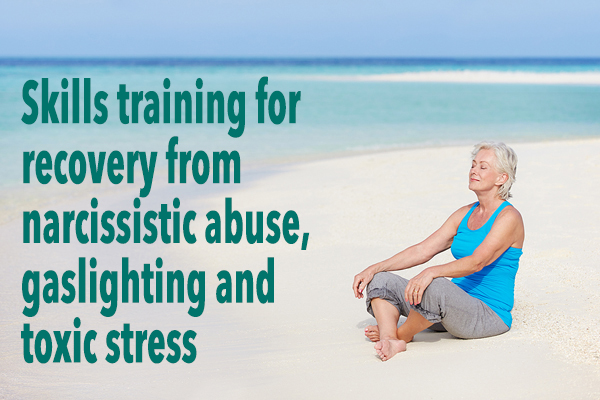
About this skills training You may have heard the old proverb, “Time heals all ills.” Well, it’s not true. When you’ve endured the manipulation, betrayal and abuse of a sociopath, the wounds are deep. If you just kind of move on, they may scab over in time, but they don’t really heal unless you consciously focus on your recovery. Therapists can be helpful if they understand your experience. But even so, therapists can’t recover for you. You’re the one who needs to recover. It will go a lot faster, and you’ll feel a lot better, if you make a decision to focus on it. So what can you do? Last fall, my colleague, Dr. Liane Leedom, who is herself a survivor, presented a Lovefraud webinar …
The only treatment specifically for real recovery from narcissistic abuseRead More
I believe he was poisoning me with antifreeze
Lovefraud received the following email from a Canadian woman whom we’ll call “Martha2025.” She believes that her disordered ex was poisoning her with antifreeze. I was in the relationship for 10 years. I never knew anything about narcissists, after I was out of it, a Tik Tok video by a woman came up. This is where I became aware of what had happened. I believe he was poisoning me with antifreeze. Waited for three years I met him at my work, and asked him out, never wanting a relationship just a date. He became my mate though in 2 weeks. I had held out for 3 years not moving fast, or living together, or saying I love you, and then I made the move into his place …
Online summit: How to recover from a narcissistic mother
Most people whom I coach reach out to me because they’re dealing with a disordered partner. But what originally made them vulnerable to the exploiter? Often, they realize they’ve become romantically involved with someone who is just like their mother. Growing up with a narcissistic mother profoundly affects you. To comply with her demands and criticism, you may become a perfectionist. Or a people pleaser. And research shows that abuse as a child makes you vulnerable to hooking up with a sociopath as an adult. I am pleased to be part of a FREE upcoming online event called Daughters of Narcissistic Mothers. For three days, Sept. 23-25, Laura K. Connell is bringing you int …
Online summit: How to recover from a narcissistic mother Read More

Healthy shame, toxic shame and sociopaths
UPDATED FOR 2025. As human beings, we’re not perfect, and sometimes we learn this the hard way. Shame is the unpleasant, unsettling emotion that we feel when we discover a defect in ourselves. Although we feel badly, shame can actually be constructive — it can motivate us to learn, improve, or make amends. This is healthy shame. Toxic shame, however, is destructive; we feel weak, pathetic and worthless. Sociopaths never feel healthy shame, and they push us to feel toxic shame. At the most basic level, shame is a defense mechanism, according to the National Institute for the Clinical Application of Behavioral Medicine (NICABM). It enables us to learn how to keep ourselves safe from harm. Thi …

Explaining dysfunctional relationships as codependency
UPDATED FOR 2025. When we face difficulties and hardship in life, we try to find meaning in the experience. This is certainly the case with all of us who have tangled with sociopaths. We ask, how did this happen? More importantly, why did this happen? Many people have answered the questions by explaining dysfunctional relationships as codependency. In fact, for some people, explaining dysfunctional relationships as codependency is comforting. This is the point of a study entitled, The lived experience of codependency: an interpretative phenomenological analysis, by Ingrid Bacon and colleagues. The research was based on in-depth interviews with eight people who identified themselves as …
Explaining dysfunctional relationships as codependencyRead More
Psychopath brains are smaller, research shows
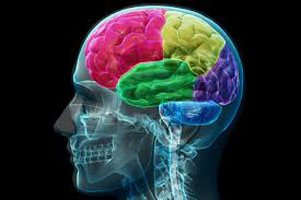
Psychopaths have more than an attitude problem. They are cold, uncaring, manipulative and aggressive due in part to their biology. The overall volume of gray matter in psychopath brains is less than normal. And new research shows that specific areas of their brains associated with skills such as behavior control are smaller. What does this mean? Psychopathic traits and behaviors are baked into their heads. Changing their behavior means changing their brains, which may not be impossible, but it is certainly incredibly difficult. Magnificent brain The human brain is magnificent. It’s what sets us apart from other living creatures. The outermost layer is called the cerebral c …