
Perhaps you’ve been making yourself crazy, trying to understand your relationship. No matter what you do, you can’t seem to make your partner happy. You feel confused, dismayed and, thanks to your partner’s complaints and accusations, guilt-ridden. Well, there’s an easy way to clear up your confusion. You just need to understand the games sociopaths play.
Here’s the bottom line: To the sociopath, the relationship with you is nothing but a game.
What’s a game?
A game, according to the Merriam-Webster dictionary, is a “physical or mental competition conducted according to rules with the participants in direct opposition to each other.” When you’re in a relationship with a sociopath, he or she is playing a game, but you don’t know it.
The sociopath is involved with you in order to win. Win what? Well, that depends on what the sociopath happens to want at the moment. It could be sex. It could be money. Maybe the sociopath looks at you as ego-boosting arm candy. Maybe the sociopath needs a place to live, and the easiest way to solve that problem is to move in with you. Or maybe the sociopath is simply looking for entertainment, and you just happened to come along.
The sociopath begins hot pursuit, with the objective of winning you over. He or she showers you with attention, coaxes you into bed and promises a wonderful happily-ever-after. You interpret this to mean that the person has feelings for you and wants love, companionship and mutual support.














So you’re behaving according relationships rules, not realizing that the sociopath is playing by game rules.
Three components of love
How is this possible? Doesn’t everyone feel love? Want to love? Want to be loved? Actually, no.
Sociopaths are fundamentally different from the rest of us. This is the difference: They are not capable of authentic love.
Scientists have learned that there are three components to authentic romantic love. They are:
- Attraction — the desire to be with a special person.
- Sex — physical intimacy.
- Caregiving — the desire to care for the people you love. You want them to be happy and healthy. You want what is best for them.
Sociopaths can do the first two components. They can find someone attractive, and they almost always want sex. However, sociopaths do not do caregiving. They cannot authentically care about someone else. They only care about themselves.
Neurochemistry of love
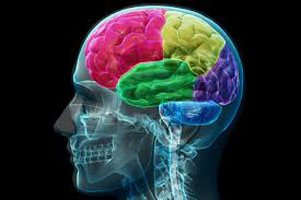
Sociopaths have more than just a different outlook; they have a different biology.
The experience of love involves multiple regions of the brain and hormones. Oxytocin and vasopressin are the hormones most closely associated with romantic love, according to Gayle Brewer at the University of Central Lancashire.
Concentrations of both hormones increase during the intense stages of romantic love. These hormones act on numerous systems within the brain and receptors present in a number of brain areas associated with romantic love. In particular, oxytocin and vasopressin interact with the brain’s dopamine reward system. This creates the feelings of pleasure associated with romantic love.
While men and women are both influenced by oxytocin and vasopressin, women are more sensitive to oxytocin and men are more sensitive to vasopressin.
Oxytocin, vasopressin and personality disorders
Typically, oxytocin and vasopressin promote trust and cooperation and reduce aggression. But research has suggested that these hormones function differently in people with personality disorders.
Researchers from the Netherlands studied this further. Youri Berends and colleagues investigated baseline oxytocin and vasopressin in men with personality disorders. They studied male patients in a forensic psychiatric center who were all diagnosed as sociopaths — they had antisocial, borderline, narcissistic, or paranoid personality disorders, or antisocial behavior that was not otherwise specified.
Read more: Games psychopaths play — flaunting other women (and men)
In the research, these men were compared to healthy controls. The results showed that oxytocin levels were higher and vasopressin levels lower in the disordered subjects than in the healthy controls. So although you would expect more oxytocin to lead to more pro-social behavior, with sociopaths it doesn’t work that way.
Why am I explaining this? I want you to understand how fundamentally different sociopaths are from the rest of us. It’s not that they just make a decision to be relationship jerks. Their body chemistry is so different that they are incapable of being loving romantic partners.
Implications of the game
All along, you thought you were in a relationship, but the sociopath was playing a game. Here are six ways in which this understanding the games sociopaths play should radically change your perception of your involvement with this person.
- Despite what the sociopath may have said, he or she wasn’t looking for love. The goal was to get something from you. Now you should be able to figure out what it was.
- Everything the sociopath said and did were for effect. If the sociopath praised or flattered you, it was to get you to comply. If the sociopath criticized or hurt you, it was to break down your resistance.
- You may have felt a real emotional connection, but the sociopath was faking it.
- Whether the sociopath treated you well or badly, it had nothing to do with you. You were simply a game piece. Don’t take it personally. Nothing you could have done would have made any difference.
- The sociopath is an opportunist, and capable of engaging in multiple games with multiple players simultaneously. In fact, for them, it’s exciting.
- The sociopath stuck around only as long as you were interesting or useful. As soon as he or she found a juicier target, game over.
Learn more: Survivor’s guide to healthy people and healthy relationships
Lovefraud originally posted this story on Sept. 4, 2023.

 LETTERS TO LOVEFRAUD: I lost myself in the relationship with a sociopath