
Reviewed by Joyce Alexander, RNP (retired) As many of you who have read my articles and book reviews in the past know, I am fascinated by scientific studies of the brain and how our experiences affect both the anatomy and physiology of our brains. Post Traumatic Stress Disorder and other life events affect our brains in many ways. In their book, The Emotional Life of Your Brain, Richard J. Davidson, PhD, with Sharon Begley, reveal more about the power of the human brain. DNA—the building blocks we get from our parents—except in the case of identical twins, is unique for each of us. Our DNA works by turning on or turning off different genes which we have inherited. For example, in …
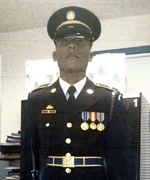
Army Specialist Isaac Goodwin marries for money, and his wife commits suicide
By Donna Andersen, author of Lovefraud.com Katherine Morris, a 22-year-old student about to graduate from the University of Maryland, left a final message on her iPhone: I am SO sorry for doing this to my parents in (sic) my friends, but I don't see myself ever being happy again. When I look at my future I don't see anything. I don't see kids. I don't see a husband. I don't see love. I don't see happiness. don't see a career. I just see more misery. It's easier this way. Please don't let him get away with what he's done & what he's doing. I didn't deserve this. I couldn't handle this. It completely depilitated (sic) me. Katherine's lifeless body was discovered in her car parked at …
Army Specialist Isaac Goodwin marries for money, and his wife commits suicideRead More
When others judge: how we may feel and what we can do to help ourselves
Last week, I experienced a bit of disappointment over an outsider's judgment. Several years ago, I came to terms with the fact that some people will understand what we have been through, and others simply will not. I brought myself to the place where I didn't really care what anyone else felt or thought about my situation. I forgave myself for choosing dysfunction and worked through the host of other issues associated with that choice. Then, I moved forward. Part of my momentum had to do with the fact that I chose to take other's beliefs and thoughts out of the equation. There is a fairly accurate saying about opinions, what they are like, and how everyone has one. So I came to …
When others judge: how we may feel and what we can do to help ourselvesRead More
LETTERS TO LOVEFRAUD: Setting the record straight
Editor's note: Lovefraud received the following letter from a reader whom we'll call "Toby." This letter is from "Toby" to his ex girlfriend named "Celest." Names have been changed. Dear "Celest." After our talk the other day I was thinking about what you were saying in reference to "Respect." Let's talk about that. I know that here in this format I won't be interrupted every time I try to make a point. You constantly say that I need to get over you and the past. You also act as if nothing in the past matters. Even four years ago is ancient history (according to you). This however, is another one of your flaws. I would chalk it up to your age but you seem really bent on this point …
How our brains become addicted to risk
Ben Thomas, a journalist and independent researcher, studies consciousness and the brain. In an article about brains and risk, he wrote: “See, deep within your brain lies a structure known as the anterior cingulate cortex (ACC), which is strongly implicated in weighing fact and emotion, and in viewing your desires through a lens of potential risks. A malfunctioning ACC may play a major part in disorders like schizophrenia, which can involve poor impulse control, whereas an overly active ACC may contribute to excessively harsh self-criticism. The ACC's judgments don't stand alone, though; they can be influenced by a region known as the nucleus accumbens (NAcc), which "lights up" with …
Soothing the inner child
In the past few articles — and I hope this hasn't been confusing — I have tried to describe how we can help heal the damage to our self-esteem and recover our lost selves, while we are still with the sociopath or after we've left the sociopath. The most important thing is mindfulness; the awareness of what's going on in your body and mind in the presence of the sociopath. We get triggered and react emotionally to their manipulation, blame, abuse and dismissive behavior. In fact our brains and nervous systems get what is called “hijacked” by the emotional reaction, and our rational thinking is not available to us. The reaction makes us believe what we feel — e.g. we are wrong, we are …
EFT Tapping helps you deal with the trauma of sociopaths
I first learned about the concept of energy psychology a year or two ago. Here's the basic premise of energy psychology, according to David Feinstein, author of The Promise of Energy Psychology: Stimulating energy points on the skin, paired with specified mental activities, can instantly shift your brain's electrochemistry to: help overcome unwanted emotions such as fear, guilt, shame, jealousy, or anger, help change unwanted habits and behavior, and enhance your abilities to love, succeed, and enjoy life. The basic technique of energy psychology, or Emotional Freedom Technique (EFT), is tapping. By tapping the endpoints of certain meridians in the body, while focusing on an …
EFT Tapping helps you deal with the trauma of sociopathsRead More
How do I forgive myself for staying in this relationship?
Lovefraud recently received the following email: I suspected that my ex boyfriend was a sociopath, but your website confirmed it. I always thought that sociopaths were murderers like Ted Bundy or Casey Anthony, but I realize now that the vast majority lead "normal" lives (whatever that means). I'm a divorced mom with a precious little daughter. My ex boyfriend was the first man I dated after a long and abusive marriage to an alcoholic. I was with my ex boyfriend a little over 2 years, although he exhibited signs of sociopathic (or what I considered narcissistic) behavior, including chronic infidelity, pathological lying, a grandiose sense of self, a total lack of empathy (particularly …
How do I forgive myself for staying in this relationship?Read More
LETTERS TO LOVEFRAUD: Not my sociopath
Editor's note: The following post was written by the Lovefraud reader "Adelade." January 30, 2013, was the “day after” my divorce trial. I was granted my maiden name as a term of the divorce. The rest of the terms aren't important. What is important is that once I discovered what he had done, he ceased being “mine” in every capacity. He was no longer “my husband,” and he was never “my spath.” He is his own disordered individual and belongs to himself, solely, and forever. Once a person is proven to be toxic to me, they are no longer “mine,” and I would like to convey this concept to every LoveFraud reader to consider. When they were “ours,“ they were strictly an illusion. What they …
LETTERS TO LOVEFRAUD: Still lying after all these years
Editor's note: The following essay was written by the Lovefraud reader whom we'll call “Ella Mae.” I wish I would have read the signs early on and went with my gut 6 years ago. My story is this. We have been in a relationship for six years. Two of those six years we were married. We decided we would get married because I got pregnant. I thought that he would change and we would live happily ever after-- but that wasn't the case. When we were dating there were many red flags but I chose to ignore them. Every time he was caught in a lie, he would have an explanation. Me being naive, I thought how can someone possibly make a lie for everything. I gave him the benefit of the doubt and …
LETTERS TO LOVEFRAUD: Still lying after all these yearsRead More